If you've been to PSA's website recently to submit cards through their most affordable tier and found it unavailable, you're not imagining things and you didn't miss a payment. On June 2nd, PSA announced they were temporarily shutting down every submission tier under $80 — Value Bulk, Value, Value Plus, Value Max, all of it — because their backlog had hit 10 million cards.
If you've been in this hobby for any length of time, you already know what happened next. Collectors rushed to get their submissions in before the door closed. The backlog climbed to 14 million cards. Fourteen million. I don't know whether to laugh or go lie down. PSA made an announcement designed to reduce their workload and wound up creating the single largest card grading pileup in hobby history. I've learned the hard way that this hobby punishes patience and rewards panic. Apparently PSA is learning that too, from the inside.
Until they dig out — which they're estimating could take four months — your cheapest option at PSA is the Regular tier at $79.99 per card, with turnaround stretched from 40 business days to 50. So let's talk about what to do while you wait — and whether waiting is even the right move.
What the PSA Value Tier Was
PSA's Value tier was their lowest-cost submission option, designed for cards with a declared value under a certain threshold — typically cards you'd expect to grade out at less than $500 in any condition. The fee was meaningfully lower than PSA's standard tiers, which made it the natural starting point for collectors who wanted the PSA label without paying premium prices for cards that didn't justify premium submission costs.
It was also slower — turnaround times were longer than express or standard tiers, which is part of how PSA kept the price down. You were trading time for cost, which is a reasonable trade for most collectors who aren't trying to flip cards immediately.
PSA has paused service tiers before. During the hobby's massive boom around 2020–2021, they paused most of their economy options entirely because the volume of submissions overwhelmed their capacity. They eventually brought those tiers back, usually with adjusted pricing. Whether this current pause follows the same pattern is genuinely unknown — but history suggests it's temporary rather than permanent.
Should You Wait for PSA to Reopen It?
Maybe. It depends on what you're sitting on and what your actual goal is.
If you have cards that specifically need the PSA label to achieve their maximum market value — key rookie cards of major stars, cards where the PSA premium over other graders is significant — then waiting may make sense. PSA grades carry the highest market premium on most mainstream modern cards, and if you're planning to sell, the difference between a PSA 9 and a BGS 9 of the same card can be real money.
On the other hand, if you're sitting on a stack of cards that you've been meaning to submit for months, using the Value tier's pause as an excuse to keep sitting on them indefinitely is not a strategy. It's procrastination with a justification attached. There are good alternatives available right now, and for many cards they're perfectly reasonable choices.
Your Alternatives Right Now
SGC — Probably Your Best Bet at the Moment
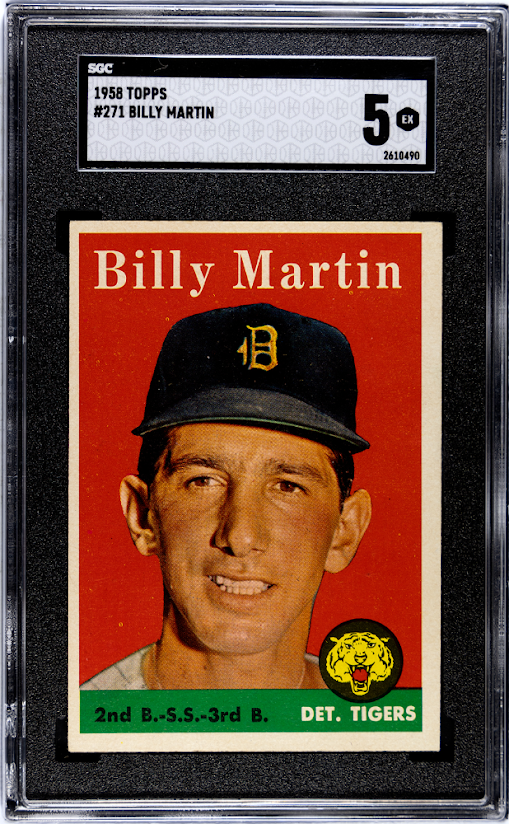
SGC has become the go-to alternative when PSA's economy options disappear, and for good reason. Right now SGC is turning around Base tier submissions in 10–20 days at $24.99 a card. Compare that to PSA's current cheapest option — $79.99 with a 50 business day turnaround — and the math isn't subtle. Their grading is considered consistent and honest, and their slab design is genuinely clean — one of the better-looking holders in the hobby, which matters more than people admit when you're displaying a collection.
The honest caveat: SGC grades typically trade at a modest discount to PSA on modern cards. A SGC 10 of the same card that has a PSA 10 on the market will usually sell for less. If you're grading to sell, factor that into your math. If you're grading to keep and protect, it matters much less.
For vintage cards — anything pre-1980 — the gap between SGC and PSA is considerably smaller, and SGC's reputation in that space is strong. If your cards are from the era I actually grew up collecting in, SGC is a very legitimate choice.
BGS — Still a Strong Option, Especially for Modern Cards
Beckett Grading Services remains a fully operational alternative with economy submission options. BGS has one meaningful advantage over PSA that becomes especially relevant when you're submitting cards you're not 100% certain about: they show their work. Your grade comes with four sub-grades — centering, corners, edges, surface — so you know exactly what held the card back if it doesn't grade as high as you hoped.
That transparency is genuinely useful. When PSA gives you a 7, you know something was wrong but not what. When BGS gives you a 7, you can see it was the centering, or the surface, or the corners — information that helps you understand your collection better over time.
BGS 9.5 is roughly equivalent to PSA 10 in the market's eyes for many cards, which means a strong BGS grade on the right card isn't the consolation prize it might sound like.
CSG — Worth Knowing About
Certified Sports Guaranty (CSG) is a newer entrant from the same company behind currency and coin grading. They've been building their presence in the card hobby with competitive pricing and faster turnarounds. Their market penetration is still lower than PSA, BGS, or SGC, which means resale value on CSG-graded cards is less predictable — but for cards you're grading to keep rather than sell, it's worth a look.
What I'd Actually Do Right Now
Here's my honest take, for whatever it's worth coming from someone who has made most of the mistakes available in this hobby:
- Sort your submission pile into two groups. Group one: cards where the PSA label specifically matters for resale value — key rookies of major stars, cards with a documented PSA premium in the market. Group two: everything else you were planning to submit because you wanted it graded and protected.
- For Group One, it's reasonable to wait. Keep those cards safe in penny sleeves and toploaders in the meantime. Check PSA's website periodically. When the Value tier comes back — and it likely will — submit them.
- For Group Two, consider SGC or BGS now. Don't let perfect be the enemy of done. Cards sitting in a shoebox aren't being protected any better than they would be in a slab, and they're generating zero enjoyment sitting in a pile waiting for one company's service tier to reopen.
- Before submitting anywhere, run the math. This doesn't change just because PSA is unavailable. Grading costs money. If the graded value of your card doesn't exceed your all-in submission cost by a meaningful margin, it's not worth grading regardless of which company you use.
The Bottom Line
PSA pausing their Value tier is an inconvenience, not a catastrophe. It's happened before in various forms and the hobby survived. Your options are: wait for PSA, go with SGC or BGS in the meantime, or — if the math doesn't work at current price points — hold off on grading entirely until conditions improve.
What I'd caution against is treating the pause as a reason to stop thinking about your collection altogether. Keep your cards protected. Keep researching values. And when the window reopens — at PSA or elsewhere — be ready to move with intention rather than just submitting everything in the pile because it's finally possible.
That's the lesson I keep having to relearn myself. Enthusiasm is good. Enthusiasm plus a plan is better.